When icy air settles in and the wind picks up, your plumbing feels it long before you do. Exposed or poorly insulated pipes lose heat quickly, which means higher energy use for hot water, slower-running fixtures, and a real risk of freezing in crawl spaces, garages, and exterior walls. A burst pipe does not just interrupt your day; it can soak floors, walls, and wiring in just a few minutes. At Baker & Sons Plumbing in Marion, IL, we help Illinois homeowners identify weak spots and insulate effectively so that their plumbing is ready before a serious freeze hits.
Why Illinois Winters Are Tough on Unprotected Pipes
Cold snaps in Illinois do not just chill the air; they push the cold deep into basements, crawl spaces, garages, and exterior walls. Pipes in those spaces sit in air that can drop well below comfortable levels, especially at night or when wind finds a path through gaps. Water in those lines cools quickly. On hot water runs, that means your water heater has to work harder to deliver what you expect at the tap.
On cold water runs, it means the water in the pipe edges closer to freezing when demand is low. A few quiet hours, a strong wind, and a section of pipe near a rim joist or foundation can cause it to lock up and crack. Pipe insulation slows that heat loss and buys you time. It keeps water within a safer range for longer, reduces temperature swings, and reduces how often your water heater fires during cold weather.
Where Insulation Matters Most in Your Home
Certain spots in a house feel winter before the rest. These are the areas where a professional will focus first. Pipes near garage doors, outer foundation walls, or drafty sill plates lose heat fast because cold air moves around them. Lines that run through unheated crawl spaces or above unconditioned ceilings sit right in that cold layer under the roof deck.
Bathroom and kitchen lines on outside walls, especially inside shallow cabinets, face extra risk when the wind picks up and cabinet doors stay closed. Exposed pipes near windows, vents, or old masonry can dip in temperature even when the rest of the room feels fine. A good evaluation maps where your plumbing and your cold spots line up. Those are the runs where proper insulation does the most good, not just to prevent a sudden burst, but to keep daily performance steady.
How Pros Install Pipe Insulation the Right Way
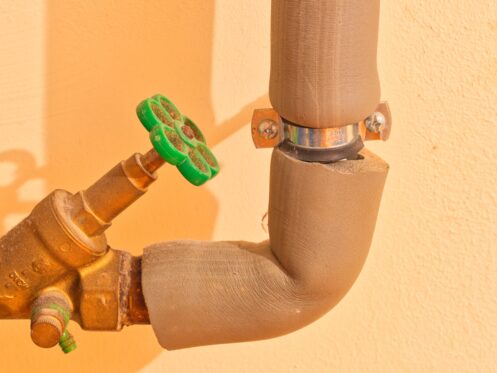
A clean installation starts with the basics. The plumber clears access, wipes pipes dry, and checks for active leaks or corrosion. Insulating over a damp or damaged area locks in problems, so fix those first. Once the surface is sound, they measure each run, so the insulation fits without gaps. Preformed foam or fiberglass sleeves are cut square at the ends and pressed gently around the pipe so they sit snugly without crushing. At fittings, tees, and elbows, sections are trimmed and shaped, so they meet cleanly rather than leaving open spots.
Joints are sealed with appropriate tape or ties rated for the material and temperature, not with random tape from a drawer. On hot water lines near heat sources, the material choice accounts for higher surface temperatures, so it will not sag or split. In exposed areas, such as garages or crawlspaces, the installer makes sure to support insulation, so it does not hang open or tear when someone moves nearby. The goal is a continuous jacket that keeps contact with the line and stays in place in daily use.
Matching Insulation Type to Pipe and Location
Different runs call for different materials, and this is where experience pays off. Closed-cell foam works well on many indoor hot and cold lines because it resists moisture and gives steady thermal protection. Fiberglass with a vapor jacket can be a strong choice on larger pipes or near higher temperatures, as long as the facing is sealed correctly.
Outdoor or semi-exposed areas may need thicker insulation or added protection around it to handle wind, physical contact, or occasional sun. Copper, PEX, and galvanized steel behave differently with heat and expansion, so the insulation must fit without squeezing or leaving air gaps. A professional will pick materials with the right temperature ratings and water resistance for each area instead of using one style everywhere. That match keeps insulation from cracking in the cold or soaking up moisture where humidity swings.
Why Gaps and Shortcuts Create False Confidence
Insulation that skips fittings, valves, or short sections between supports does not protect much. Cold finds those exposed inches and uses them to travel into the line. In a hard freeze, that small, uncovered elbow can become the weak link that cracks even though the straight runs look wrapped. Loose pieces that slide away from joints leave openings above doors, in corners, or near vents.
Tape that does not hold lets seams split, turning sleeves into decoration instead of protection. Proper work treats every part of a vulnerable run as important, not just the long, easy stretches. This attention to detail is one of the reasons to let trained installers handle the job. When you leave the job to the professionals, you end up with a system, not a patchwork.
How Pipe Insulation Supports Your Water Heater and Boiler
Pipe insulation does not change the hardware inside your water heater or boiler, yet it supports both. When hot water lines hold their heat better, the heater cycles less often to keep up with demand. That means less burner time, less stress on heat exchangers, and more stable temperatures at taps and fixtures.
In hydronic heating systems, insulation on near-boiler piping and long distribution runs keeps supply water closer to design temperature and reduces unwanted heat loss into unconditioned spaces. That helps radiators and in-floor loops receive the heat they are meant to, instead of warming a crawl space no one uses. In both cases, you stretch the life of equipment by removing waste and extra work that come directly from bare lines in cold areas.
Why Professional Installation Beats a Quick Wrap Job
It is easy to think of pipe insulation as a quick weekend task, yet small mistakes have real consequences in a harsh winter. Wrapping over an unnoticed leak can trap moisture against metal. Using the wrong material near a flue or heat source can create a fire risk. Leaving gaps near valves or unions can give a false sense of security until a cold front reveals the chilly truth.
A professional knows how to read your plumbing layout, spot the high-risk sections, and choose materials that fit both code and climate. They work with clean, dry lines, seal joints fully, and leave access where valves and unions still need servicing. That kind of installation offers real protection instead of a cosmetic cover, and it pays off when the forecast turns sharp and your plumbing keeps doing its job quietly in the background.
Seal in Heat, Avoid Headaches
Pipe insulation is a simple protection that pays off in several ways during an Illinois winter. It lowers heat loss on hot water lines, keeps vulnerable cold lines above freezing longer, and reduces condensation in cool areas that can lead to corrosion or mold. Our team can identify exposed runs, upgrade outdated materials, and pair insulation work with targeted leak repair and water heater support so that your whole system is ready for low temperatures.
If you want to minimize winter plumbing worries and keep hot water moving where it should, schedule cold-weather pipe protection with Baker & Sons Plumbing today.