When facing a sewer line repair, you might assume that a large trench will have to be dug in your yard and driveway. Luckily, this isn’t always the case anymore. Although excavation is still necessary in some cases, modern plumbing technology offers a much less destructive alternative.
Trenchless methods can repair or replace many sewer lines with minimal surface disruption. The best option for your home depends on several factors, including the pipe’s condition, location, material, and accessibility. A professional evaluation is the only way to know for sure.
This guide explores the differences between traditional excavation and two popular trenchless techniques: pipe bursting and pipe lining. Understanding each method will help you make an informed decision about how to resolve a sewer line issue.
How Does Traditional Sewer Repair Work?
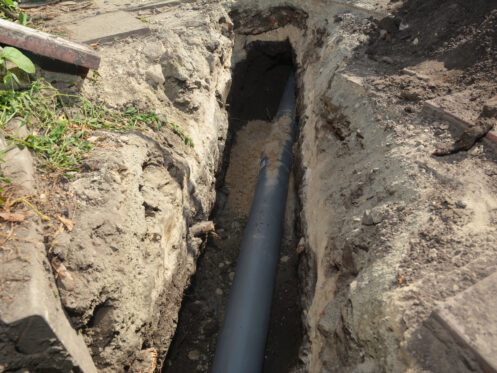
Traditional sewer line repair, also called open-cut trenching, is the method most people are familiar with. It involves using a backhoe to dig a trench along the entire length of the damaged sewer pipe, exposing it for direct access.
Having exposed the pipe, the plumbing team can remove the damaged section and replace it with new pipe. After the repair is complete and tested, they backfill the trench with soil. The primary advantage of this method is that it provides complete access to the pipe, which is essential in certain situations.
Despite the disruption, traditional excavation may be the most appropriate or only viable option in specific cases.
- Completely collapsed or bellied (sagging) pipes
- Necessary changes to the pipe’s route or grade
- Interference from other utility lines
- A pipe that’s too deteriorated for lining or bursting
The main drawback is the subsequent restoration work. Homeowners often need to invest in reseeding their lawn, replanting gardens, and repairing patios, sidewalks, or driveways in the trench path.
What Is Trenchless Sewer Repair?
Trenchless sewer repair refers to advanced methods used to fix or replace underground pipes with minimal digging. Instead of a long trench, these techniques typically require only small access points at the start and end of the pipe section. It may not be totally trenchless since small entry and receiving pits are often necessary.
The first step in any trenchless sewer repair is a thorough video camera inspection. A plumber feeds a specialized camera into the sewer line to view the pipe’s interior. This inspection helps determine the nature and extent of the damage and confirms whether a trenchless method is suitable. The two most common techniques are pipe bursting and cured-in-place pipe (CIPP) lining.
How Pipe Bursting Replaces a Sewer Line
Pipe bursting is a trenchless method that replaces an old, damaged sewer line with a new one. The process involves pulling a new pipe through the old pipe’s path while destroying the old pipe and laying the new one.
First, our plumbers dig small access pits at each end of the sewer line. Then, they feed a heavy-duty cable through the old pipe and attach it to a cone-shaped tool called a bursting head. The new, seamless pipe attaches to the back of this head.
As a hydraulic system pulls the bursting head through the old pipe, it fractures the existing pipe outward into the soil while pulling the new pipe into the newly created space. This technique is useful for pipes that are too cracked, corroded, or collapsed to be lined.
How Pipe Lining Repairs a Sewer Line
Pipe lining, or cured-in-place pipe (CIPP), rehabilitates a sewer line by creating a new, seamless pipe within the existing one. It’s an excellent solution for pipes with cracks, leaks, or root intrusion, as long as the original pipe is structurally intact enough to serve as a host.
The process begins with a thorough cleaning of the existing sewer line to remove debris, roots, or buildup. Next, plumbers insert a flexible liner saturated with a special epoxy resin into the old pipe. An inflatable bladder inside the liner then expands, pressing the resin-soaked liner firmly against the interior walls of the host pipe.
Once in place, the resin cures, which can be accelerated with heat or UV light. This process hardens the resin, forming a smooth, durable, and corrosion-resistant new pipe. The result is a restored sewer line with improved flow and a long service life without major excavation.
Why Can Trenchless Repair Protect Your Property?
For many homeowners, the most significant benefit of trenchless sewer repair is preserving their property. If your sewer line runs under valuable landscaping, a patio, or a paved driveway, digging it up can be daunting. Traditional excavation requires a trench along the entire sewer line, often destroying everything on the surface above it.
Trenchless methods, with their limited access points, can significantly reduce or eliminate damage to these finished surfaces and established outdoor areas. This helps you avoid the extra time, cost, and hassle of post-repair restoration.
- Demolishing and repaving driveways
- Removing established trees and gardens
- Reseeding large portions of your lawn
- Rebuilding patios, walkways, or decks
- Extended disruption and construction mess
However, it’s important to have realistic expectations. Trenchless repair doesn’t guarantee zero surface disturbance. The location and size of access pits depend on pipe depth, nearby utility lines, and site conditions. You need a professional assessment to understand the potential impact on your property.
Trenchless vs. Traditional: How Do They Compare?
Choosing between trenchless and traditional sewer repair involves weighing several factors related to your property and the specific problem with your pipe. There is no single “best” method; the right choice depends on a professional diagnosis.
The amount of excavation required is the most obvious difference. Traditional methods involve a long trench, while trenchless techniques use one or two small pits. This directly impacts restoration costs and time. The condition of the existing pipe is another critical factor. A pipe that is severely collapsed or has major sags may not be a candidate for lining or bursting, making traditional repair the only option.
Your property’s layout also plays a significant role. If the sewer line is easily accessible with no major structures or landscaping above it, the benefits of trenchless repair might be less pronounced. Conversely, if your line runs under a new driveway or prized rose garden, this method is often highly attractive.
The goal of the repair also guides the decision. Whether your sewer line needs a full replacement or an internal rehabilitation helps determine the choice between methods like pipe bursting and lining.
Which Sewer Repair Method Is Right for Your Home?
Homeowners should not select a sewer repair method based on convenience alone. A professional plumber will conduct a detailed assessment to recommend the most effective and durable solution for your situation, which goes far beyond a quick look at your yard.
Using a video camera, the plumber will inspect the pipe’s material, diameter, depth, and structural integrity. They will identify the exact damage, such as cracks, root intrusion, corrosion, or a complete collapse. They will also assess the pipe’s accessibility and check for nearby utility lines. This information is crucial for determining the right approach.
The basic decision comes down to this: CIPP lining rehabilitates a damaged pipe that can still support a liner. Pipe bursting installs a new replacement pipe when the old one is too deteriorated. Traditional excavation provides direct access when trenchless methods are unsuitable due to severe damage or site constraints.
Explore Your Sewer Repair Options in Marion
When facing a sewer line problem, knowing your options is the first step toward resolving it. Trenchless methods can limit disruption and save your landscaping, especially when a sewer line runs beneath a driveway or patio.
At Baker & Sons Plumbing, our family-owned business has served homeowners since 1986. We combine decades of experience with modern technology to provide effective plumbing solutions. Our team can perform a detailed camera inspection of your sewer line to diagnose the problem and help you compare repair options.
If you’re dealing with sewer issues, don’t wait for the problem to get worse. For a professional sewer line inspection and a discussion of your repair options in Marion, contact Baker & Sons Plumbing today.